Lessebo Paper Studio x
Oscar Wilder
(39)
Oscar Wilder
(2026)
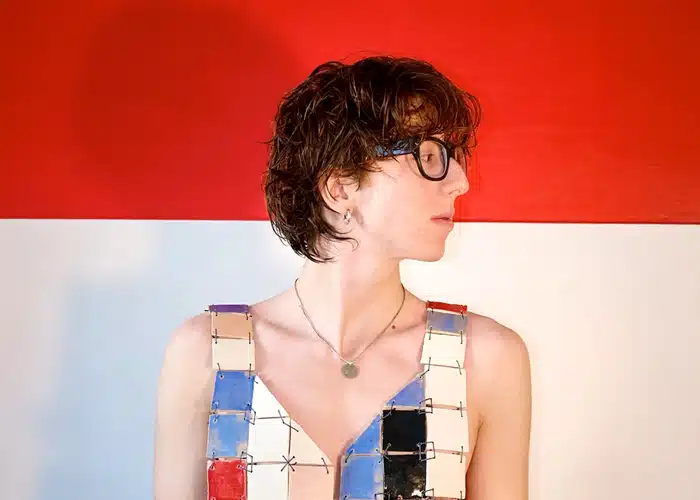
About Oscar
Oscar Wilder is a Brooklyn based artist exploring the intersection of analogue processes and modular design. Working across cardboard, ceramics, sculpture, and painting, he creates interactive pieces that invite curiosity and engagement. Through constant material experimentation, Oscar allows form and play to shape each work.
 @oscar_w_wilder
Behind My Expression
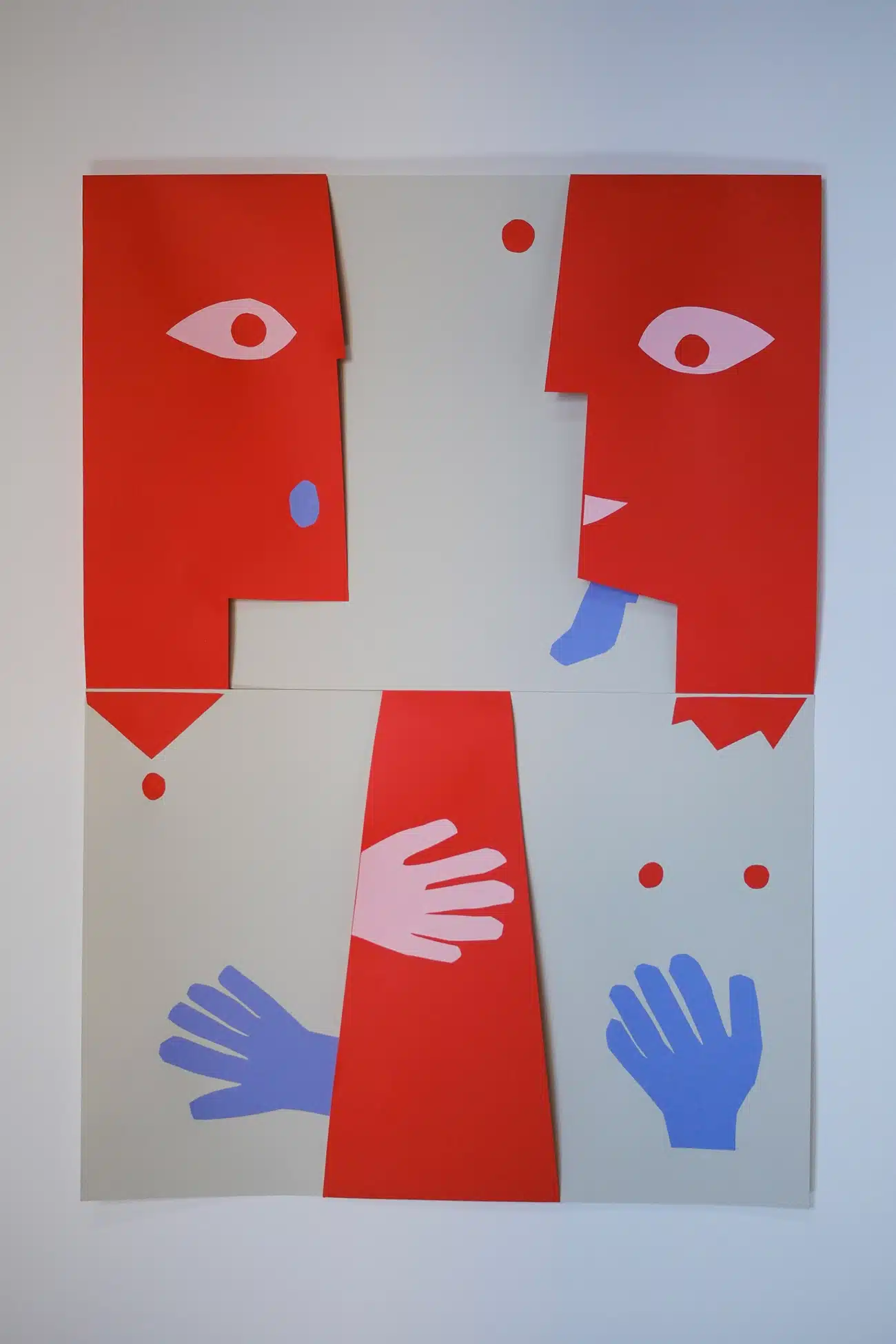
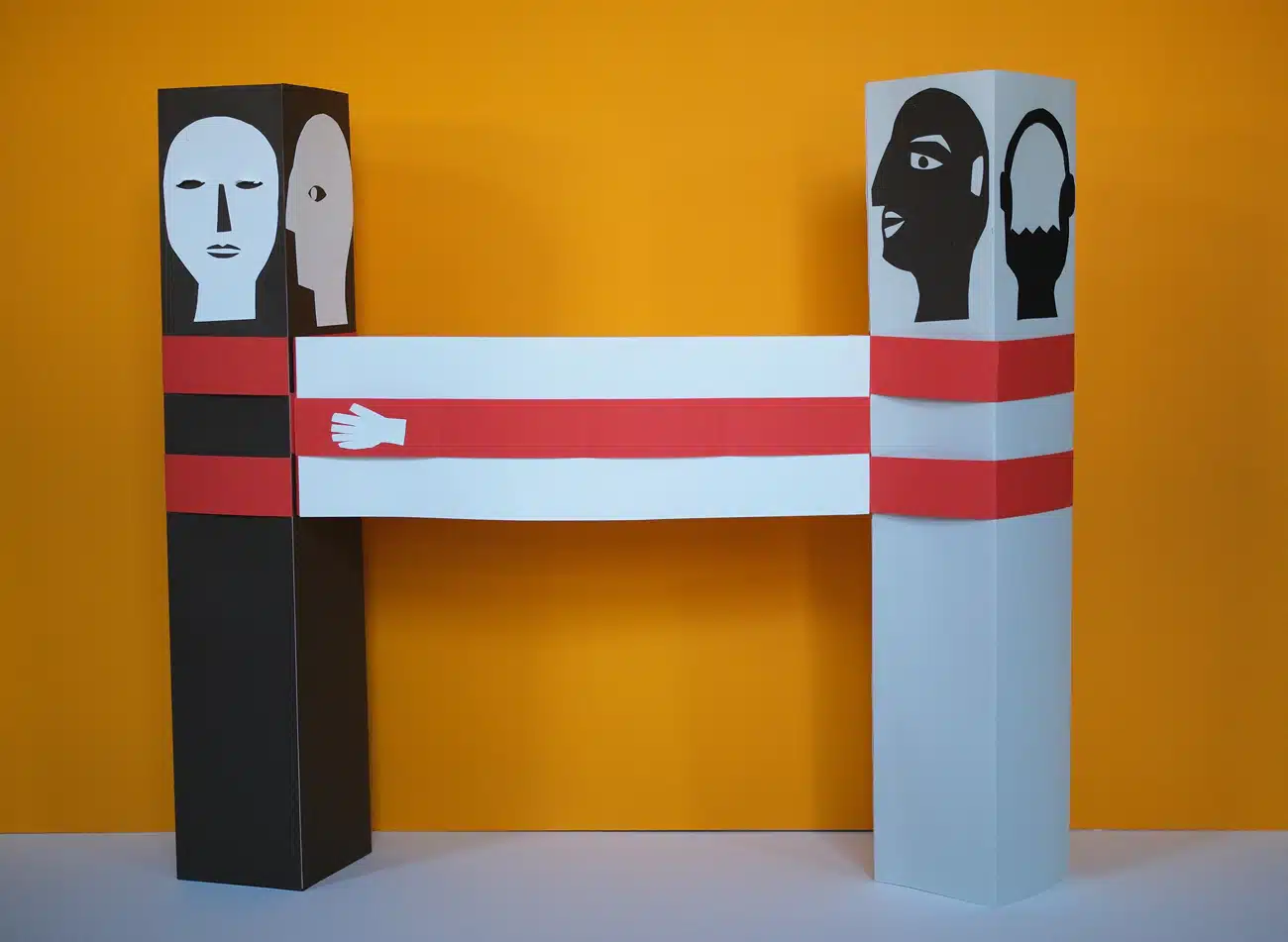
Behind my expression lies the expression of others. Expressions of each other. How many faces are there in total?
In this modular work, Oscar explores identity, repetition, and collective presence through a series of paper-based faces that can be assembled in multiple ways. The piece can shift between wall-mounted compositions and freestanding installations, allowing the form to change with its environment.
Landscape Shift, Flip Series
Landscape Shift, Flip Series explores transformation through movement and reorientation. By allowing elements to be flipped, rotated, and rearranged, Oscar creates compositions that continuously change character.
The series reflects an interest in perception and balance, where simple shifts in position create entirely new visual landscapes. Paper becomes both image and object, emphasizing its capacity to move between two-dimensional and three-dimensional expression.
Zoom Out, Zoom In,
Flip Series
Zoom Out, Zoom In is an exploration of scale and perspective. By flipping and reorienting the piece, familiar forms - faces, hands, fragments of figures, dissolve and reassemble into something entirely new. The same surface, seen differently, tells a different story.
Toys
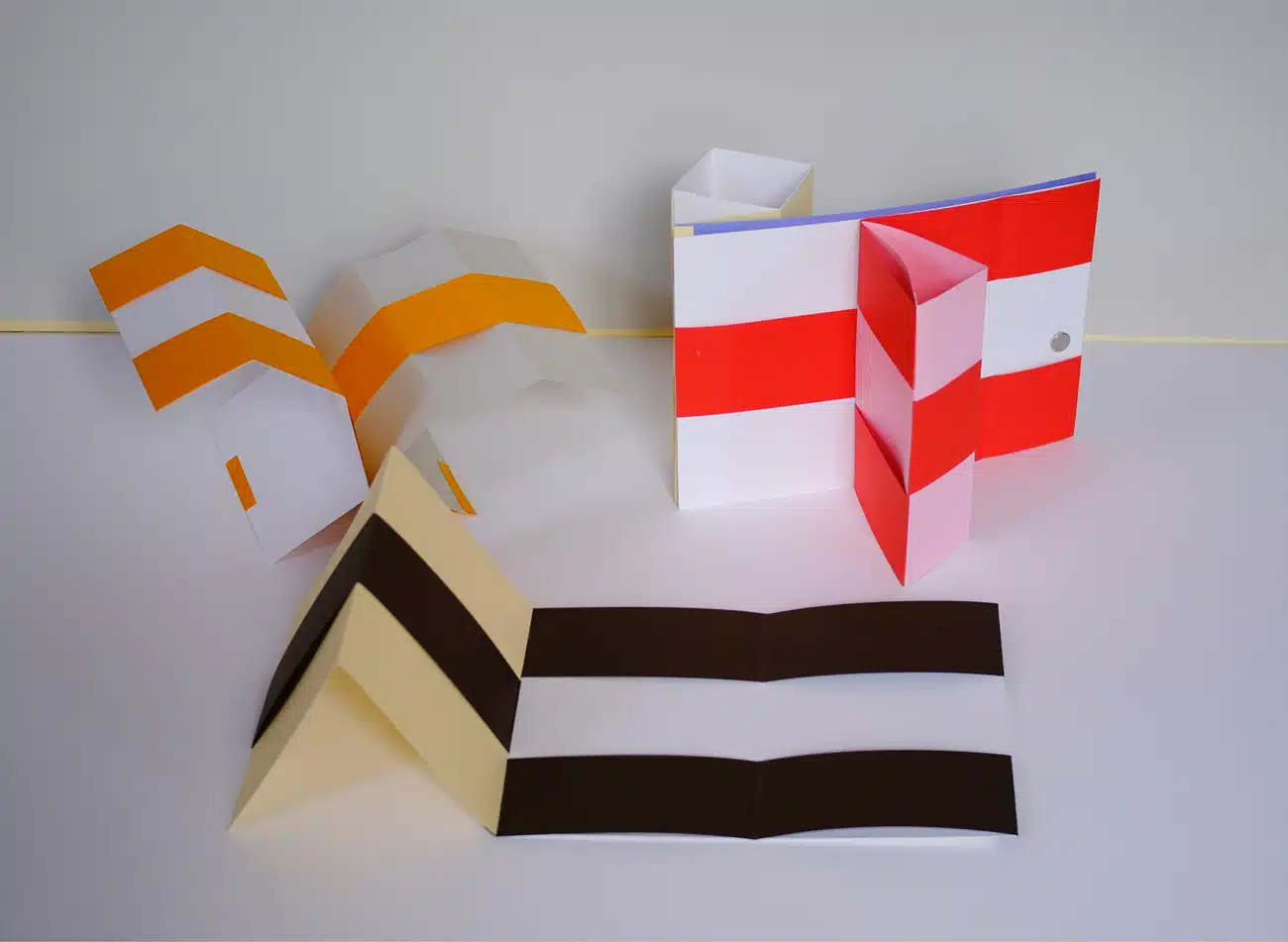
In Toys, Oscar turns paper into objects of desire. Folded, cut, and assembled into forms that recall the world of playthings, the works sit somewhere between sculpture and something you want to pick up and handle. The series taps into the same spirit of interactivity that runs through all of Oscar's practice, the sense that an object isn't finished until someone reaches for it.
Paper People
Paper People is a celebration of movement frozen in material. Oscar has assembled paper figures mid-gesture, caught in something that looks unmistakably like dance. Playful and precise in equal measure, the work reflects his ongoing interest in the figure as a point of departure, and in paper's ability to hold life and personality without a single brushstroke.
This project was brought to life using Lessebo Paper in White and Natural across a range of weights. From the delicate 170 gsm to the substantial 440 gsm, allowing Oscar to move freely between thin, flexible forms and sturdier structures. For colour, he worked with a hand-picked palette of Scarlet, Sunset, Pashmina, Chamois, Flamingo, Purple Haze, Walnut, and Pitch Black, each chosen for the way it holds its own when cut, folded, and composed alongside the others.
In Conversation with Oscar Wilder
Can you tell us about the projects you created for this collaboration?
For this first collaboration with Lessebo Paper, I created a series of flip works. Some of the projects depict figures, my go-to reference, while others challenged me to create abstract landscapes and purely abstract works, playing with shape and color. Generally speaking, paper art pieces can be framed and displayed in a very straightforward manner, but as always, I like to make it more complicated than that.
What was your first impression of working with Lessebo Paper?
For some reason, I’ve generally refrained from using paper as the material that a piece takes its final form in, but I always use it to sketch ideas in 3D and create models. Given this invitation to use paper as a final material has opened me up to it in many ways. In some ways, it’s the material that my work translates most easily into, allowing me to really play with shape and form and enabling those interacting with the work to see things in new ways.
Originally, I had planned on painting on some of the paper from Lessebo, but I quickly cast aside that idea when I realized the color and feel of the paper made me want to use it purely in a collage manner instead, which allowed me to experiment in other ways.
Was there anything about the paper that surprised you?
The versatility of the paper itself, and how well it worked in three-dimensional forms, somewhat surprised me. I expected to be using the thickest GSM that Lessebo had available, but when picking my papers for each of these projects, I ended up going with a few thinner ones and found it interesting how these actually worked better for some modular aspects.
Can you walk us through your process?
I originally crafted a few paper models using just tape and cut-up paper. These then became the templates that I could use to create the bigger pieces. Then came the laborious task of measuring and creating notes and diagrams that would help me use each paper in a way that limited the amount I would have to cut off, and therefore waste.
After that, I used X-Acto knives and glue. On one piece I painted black and red ink drawings. For this piece, when I felt something was missing with just the ink drawing, I decided to bring in some collage with colored papers to liven up and abstract the background.
Why did you choose to approach these works in a modular and changeable way?
I chose to approach these works in modular ways because I like to make my work interactive. I love creating work that continues to have a life once I have finished making it. The next person to touch it and move it takes part in changing its character by rotating it, flipping it, or holding it. Both the art and the viewer become engaged in ways that are different from the usual viewer–art relationship.
Are there techniques or directions you'd like to explore further with paper?
I’ll continue to explore new things with paper and use it as one of my many materials. I want to play with ideas of animation through paper by creating zoetropic creations, as well as lenticular physical animations, wherein a person has to move one aspect in order to activate the animation.
I’d also like to create more pop-up paper pieces, using ideas from pop-up books and making them large and colorful. In regards to a few of the projects I’ve created, I would also like to experiment with turning them into lamps, ones that can be moved, thus creating different shadows and emphasizing the texture and color of the paper.


Lessebo Paper AB | | +46(0)478-476 00 | Orgnr: 556955-1616